
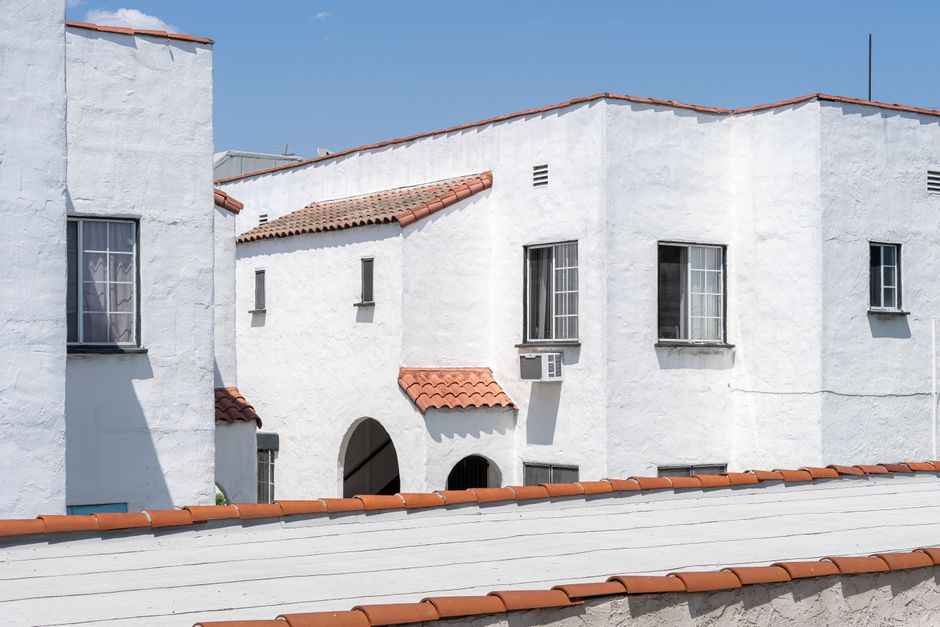
Fall is prime time to prep exterior painting in Los Angeles. Temperatures are still mild but seasonal rains can start within weeks; if you paint over dirty surfaces or unresolved leaks now, expect peeling and touch-ups once the rains begin.
When to schedule painting
Book painting that requires 48–72 hours of dry weather to allow primers and topcoats to cure—this is often achievable in fall in Los Angeles, when days are still mild and early-season rain tends to arrive in intermittent storms. If a two- to three-day dry window isn’t available, delay until after the next dry spell.
Prep checklist (numbered)
- Inspect and fix leaks (DIY if minor, pro for roof or complex flashing). Roof and flashing leaks let moisture under paint; replace cracked caulk around windows and doors—plan 1–3 hours for a typical single-family facade.
- Clean surfaces with pressure washing (pro recommended for multi-story or clogged porches; DIY for single-story using a 1,500–2,000 psi washer). Pressure wash loose dirt, pollen and chalk—Los Angeles’ dry summers leave heavy pollen and dust that prevent adhesion.
- Scrape and sand loose paint (DIY small patches; pro for >20% of surface). Remove peeling paint back to a firm edge—expect 1–2 days for a medium-sized house when done by hand, longer if chemical strippers are needed.
- Repair wood and stucco (pro recommended for structural rot; DIY patching for hairline stucco cracks). Replace rotted trim sections and fill stucco cracks with elastomeric patch to prevent water intrusion during winter rains.
- Prime exposed surfaces with weatherproof primer (pro if matching extensive areas; DIY for small touch-ups). Use an exterior acrylic or oil-based primer rated for wet conditions; primers improve adhesion and reduce recoat failure when humidity rises above 60%.
- Choose moisture-tolerant topcoats (pro for color-matched jobs; DIY for standard white/neutral trim). Select a 100% acrylic exterior paint or an elastomeric finish for sun‑faded stucco—these resist chalking and expand/contract with Los Angeles’ day–night temperature swings.
- Protect landscaping and hardscape (DIY). Cover plants, pavers and pools with plastic sheeting and weigh edges down; paint overspray dries faster in warm, low-humidity conditions but still risks staining porous stone.
Local factors that change the plan
Los Angeles’ coastal areas see higher humidity and salt air; near-ocean homes need corrosion-resistant primers on metal and more frequent inspection of wood grain. Inland San Fernando Valley properties often have larger day–night temperature swings—choose flexible elastomeric paints for stucco to prevent hairline cracking. Orange County microclimates vary; check local forecast for a 72-hour dry window before scheduling.
Which items to hire a pro for
Hire a professional for roof or flashing repairs, structural wood replacement, multi-story pressure washing, and full-house repainting where color matching matters. Pros bring scaffolding, commercial-grade pressure washers (2,500+ psi with surface cleaner), and experience sealing joints that fail in late-season rains. Cost depends on house size, surface condition and scope, so get a written estimate after an on-site look.
If you do nothing else: replace cracked caulk around windows and doors. A tube of exterior-grade caulk and 1–3 hours can stop rainwater entry and prevent peeling in the areas most likely to fail during the first storm.
O Painting (previously Oriental Painting) offers free estimates in Los Angeles, the San Fernando Valley and Orange County. Call (888) 280-2353 to schedule an exterior inspection.